

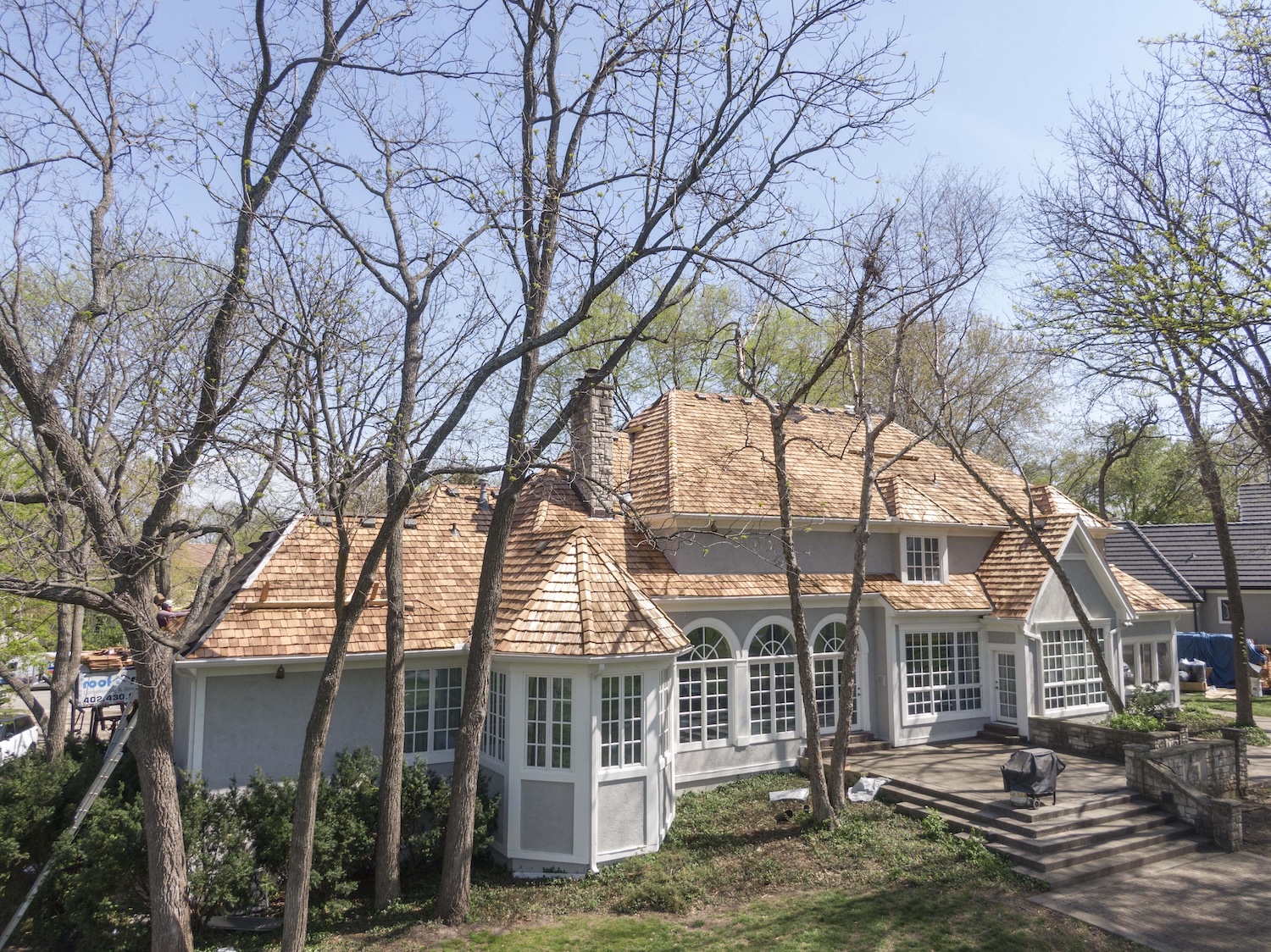
Roof Geometry: A Guide for Residential Roof Shapes
Your home’s roof is its first line of defense against the elements, but its function goes far beyond simple shelter. The shape, or geometry, of your roof plays a pivotal role in how your home handles everything from heavy snowfall and high-velocity winds to atmospheric rivers and relentless moisture.
Understanding the differences between common roof styles isn't just an architectural exercise; it’s an essential step in ensuring your home remains durable, energy-efficient, and structurally sound for decades to come. Whether you’re looking at the iconic gable, the robust hip, or the modern flat roof, each design offers distinct advantages tailored to specific climates and building needs.
In this guide, we’ll break down the pros and cons of these three primary roof systems to help you determine which configuration best protects your property.
Is A Gable Roof Right For My Home?
If you ask a child to draw a picture of a house, you can probably expect to see a square with a triangle on top. That classic, peaked design is the iconic gable roof—and it covers about 65% of American single-family homes built since 1950.
Widespread popularity aside, is the gable roof shape the right choice for your home? The answer heavily depends on if you can expect to face that heavy, wet snow that characterizes the Midwest’s notorious winters. But if atmospheric rivers and other downpours like those in the Pacific Northwest are more characteristic of your home’s climate, is a gable roof the way to go? Let this guide help inform your decision.
Not All Gables Are Alike: 4 Gable Styles Explained
Not all gable roofs look like a child’s drawing, though. You’ll see examples of this simple shape in several distinct styles:
- Standard (Open) Gable: The classic, symmetrical look. It features two equal slopes meeting at a central ridge. With a steep pitch, this is a staple for shedding heavy winter snow in Nebraska.
- Cross Gable: Two or more gable sections meeting at right angles. This style works beautifully for larger, multi-wing homes, though the intersecting valleys require extra waterproofing in rainy coastal zones.
- Dutch Gable (Gablet): A hybrid design where a mini gable sits on top of a sloping hip roof. This is a secret weapon for high-wind areas, offering the aerodynamic wind resistance of a hip roof with the extra attic space of a gable.
- Gambrel: The classic "barn roof" with a shallow top slope and a steep lower slope. It maximizes upper-floor living space, making it a timeless favorite across rural Corn Belt landscapes.
How Gable Roofs Hold Up In Severe Weather
The Midwest Edge: Superior Snow Shedding & Ventilation
If you live in the Great Plains, winters mean high winds and heavy snow, and summers mean sweltering attic heat and humidity. Gable roofs excel here for the following reasons:
- Effortless Snow Shedding: When built with a steep pitch (such as a 6/12 slope or higher), a gable roof forces heavy snow and ice to slide right off, drastically reducing the risk of structural roof collapse.
- Beating the Summer Heat: Gable roofs make it incredibly easy to install louvered vents on the flat exterior walls. When paired with soffit vents, this creates continuous cross-ventilation that can drop attic temperatures by 10–15°F during scorching July days, meaning you can save money on cooling costs.
Pacific Northwest Realities: Managing Heavy Rain & High Winds
For homeowners in Coastal Washington and Oregon, blizzards are less of a concern than the relentless moisture and intense coastal wind gusts. Gable roofs excel at drainage—the simple geometry means rain slides off quickly, reducing the risk of pooling water.
However, gable roofs are vulnerable to wind. While the sloped and shingled sides are aerodynamic, the flat, triangular gable walls act like giant sails. High coastal winds can create massive uplift pressure, threatening to peel the roof away if it isn't properly braced.
The Hip Roof Advantage: When A Hip Roof Is The Right Choice
As noted above, the “square-under-a-triangle” house shape that most children draw is a classic open gable—a massively popular roof shape that is seen on more than 50% of contemporary American homes. But certain climates demand a more robust architectural solution to handle environmental extremes, and that means one thing: a hip roof.
Unlike the Gable Roof which features two sloped, shingled planes and two vertical walls, a Hip (or Hipped) Roof slopes downward on all four sides to meet the exterior walls.
This roof geometry is especially effective because it replaces those triangular walls with shingled planes that intersect at an exterior angle known as a "hip," creating a naturally self-bracing and balanced system.
For homeowners navigating the weather patterns of the Pacific Northwest, the Great Plains, or the Rocky Mountains, understanding how this geometry serves as a structural shield can prevent costly storm damage while optimizing long-term energy efficiency.
Hip Roof Styles: 4 Types of Hip Roofs
This four-sided geometry can be seen in several distinct configurations, each offering specific advantages for different home designs:
- Simple Hip: The standard configuration featuring two triangular and two polygon-shaped planes meeting at a central ridge. It delivers a clean, classic aesthetic ideal for rectangular footprints.
- Pyramid Hip: A symmetrical design where four identical triangles meet at a single peak. This is best for square homes, gazebos, and compact architectural layouts.
- Jerkinhead / Hipped Gable: A hybrid "best of both worlds" design. It maintains the vertical attic headroom of a gable while exchanging the top point of the “triangle” for an aerodynamic hip, allowing for gutters around the entire perimeter.
- Cross-Hip: Specifically engineered for L-shaped or multi-wing custom homes. This style joins two separate hip sections, creating a visually striking silhouette that requires expert waterproofing in the intersecting valleys.
How Hip Roofs Hold Up In Extreme Weather
The geometry of your roof determines how effectively your home stands up to Mother Nature’s extreme storms. Here’s information about how different hip configurations perform across our zones of service:
Prairies and Rockies: An Effective Defense Against Wind and Snow
From the flat plains of the Midwest to high-elevation mountain zones, homes west of the Mississippi face volatile winds and heavy snowfall.
Hip roofs excel here for two primary reasons:
- Aerodynamic Wind Resistance: By sloping inward on all sides, hip roofs lack the flat gable walls that act like giant sails. This profile allows tornadic gusts and high-altitude winds to glide over the building, significantly reducing the uplift pressure that can peel a roof away.
- Uniform Snow Loading: The four-sided pitch ensures that heavy snow and ice slide off symmetrically. This prevents the uneven structural bowing that can occur when weight concentrates on a single roof plane, protecting your rafters during intense winters.
The Pacific Northwest: Managing Relentless Moisture
For homeowners in coastal Oregon and Washington, moisture control is the single biggest challenge for maintaining a healthy building envelope.
Hip roofs are a great choice for the Northwestern United States due to:
- Continuous Perimeter Drainage: Because every side slopes toward an exterior wall, hip roofs allow for seamless gutter installation around the entire home. This eliminates "dead spots" and pooling water, directing runoff away from the foundation 40% more effectively than complex flat-gable hybrids.
The Unconventional Choice: Understanding Flat Roof Systems
While a majority of American homes feature the classic triangular pitch of a gable or hip roof, flat roof systems are more closely associated with modern architecture, including multifamily homes and commercial buildings. And, despite its name, a “flat roof” is never perfectly level: it is engineered to slope slightly in order to ensure essential drainage and to avoid the dreaded stagnant puddles that characterize “roof ponding”.
For properties that prioritize functional surface space, durable membrane barriers, and clean sight lines, a low-slope roof is an unmatched solution.
- Many flat roofs use continuous membrane barriers (like TPO or EPDM, described below) to shed water, instead of relying on a steep pitch.
- Flat roofs are highly wind-resistant, making them ideal for high-wind areas like the Great Plains and stormy coastal zones.
- The surface space of flat roofs can be leveraged for HVAC units, rooftop gardens, or outdoor patios.
- Flat roofs require specialized maintenance, particularly seasonal clearing of drains and scuppers, to prevent ponding.
What Flat Roof System is Right For My Building?
Architects and engineers utilize several distinct systems to manage water flow on low-slope roofs, each suited to specific environmental demands:
- Built-Up Roof (BUR): Often called "tar and gravel," this is one of the oldest systems. It uses multiple layers (plies) of felt and hot-applied asphalt to create a tough, thick barrier. This is a reliable choice for the Midwest, where its sheer mass resists cold-weather contraction.
- Modified Bitumen (MB): An evolution of BUR, this asphalt-based system is combined with polymer additives for enhanced elasticity and flexibility. This makes it highly durable against the expansion and contraction caused by Nebraska's dramatic temperature swings.
- Single-Ply (TPO or EPDM): These lightweight, flexible membranes—Thermoplastic Polyolefin (TPO) and Ethylene Propylene Diene Monomer (EPDM)—are mechanically fastened or adhered. They are excellent for water resistance and heat reflection—a crucial factor in cooling costs during summer heatwaves.
- Fluid-Applied (Coatings): Specialized liquid compounds, or coatings, can be applied directly to the roof deck or the roof’s existing membrane. Coating systems offer seamless waterproofing and are highly valuable in the Pacific Northwest for resurfacing existing commercial roofs.
How Flat Roofs Perform In Extreme Weather
The performance of a flat roof is directly tied to the quality of its membrane and the efficacy of its drainage plan.
Prairies and Coasts: Superior Wind Resistance
From the flat plains of the Midwest to intense coastal zones, flat roofs offer a structural advantage over high-profile roofs:
- Aerodynamic Strength: With no vertical walls to catch wind uplift (unlike a gable), the low-slope profile allows tornadic gusts and high-altitude winds to glide over the building, significantly reducing the pressure that can cause structural failure.
- Hail Resistance: Due to their robust, layered construction (especially Modified Bitumen), many flat systems offer excellent puncture resistance against hailstones common in the Plains states.
The Pacific Northwest: Managing Relentless Moisture
While excellent for drainage, a low-slope roof requires precision to manage constant moisture:
- Seamless Barriers: Modern single-ply membranes like TPO and EPDM roofs are designed to create a continuous, watertight envelope that minimizes seams where the relentless coastal rain could penetrate.
- Ponding Vulnerability: The biggest vulnerability of a flat roof is ponding—when water stands for more than 48 hours. This accelerates material decay and must be addressed through a rigorous maintenance plan focused on keeping drains and scuppers clear.
Cost, Longevity, & Mechanical Trade-offs (2026 Estimates)
When choosing the right geometry for a replacement or a new custom build, balancing immediate installation costs against long-term architectural benefits is key.
| Roof Geometry | Initial Investment | Material & Labor Breakdown | Structural Lifespan | Key Design Benefit |
|---|---|---|---|---|
| Gable Roof | Most Cost-Effective | Highly economical; saves 25% to 35% on labor and materials compared to more complex designs. | Variable depending on materials chosen. | Maximizes attic storage and upper-floor living ventilation. |
| Hip Roof | Increased Investment | Requires specially trained installers and roughly 30% more physical material for proper trimming. | Easily lasts 50+ years when paired with premium options like DaVinci composites or GAF shingles. | Self-bracing frame with superior resistance to high-wind uplift. |
| Flat Roof | Moderate to High | Utilizes fewer framing materials but requires certified professionals for single-ply membrane welding. | Typically yields 20 to 30 years of continuous, watertight protection with proper clearing. | Creates functional rooftop space for HVAC units, solar arrays, or patios. |
Which Style Fits Your Property?
There is no single "best" type of roof, but industry-best practices indicate the following:
- Opt for a Gable Roof if: You are working with a strict budget, live in a milder climate zone, and prioritize maximum attic ventilation and upper-floor living space.
- Opt for a Hip Roof if: Your property sits in a high-wind belt, tornado alley, or area subject to relentless snow loading. If structural preservation and safety are your top priorities, this is an investment that pays dividends in longevity.
- Opt for a Flat Roof if: Your property demands maximum wind resistance, you need functional rooftop surface space, or you prioritize a durable, watertight membrane system for long-term structural stability.
Or opt for another popular roof shape by contacting Roof Rite Exteriors today.
Protect Your Investment: Schedule an Expert Inspection
Don’t wait for the next atmospheric river or severe prairie storm to find out if your roof's geometry can handle the pressure. Whether you are budgeting for a replacement, recovering from storm damage, or simply need an expert evaluation of your roof, our friendly staff at Roof Rite Exteriors is here to help.
Our specialized teams understand exactly what it takes to build or repair secure, durable exteriors that stand up to extreme weather.
Talk to a Local Estimator: Call our project desk at (402) 430-9538 or click here to schedule your inspection with the friendly professionals at Roof Rite Exteriors today!